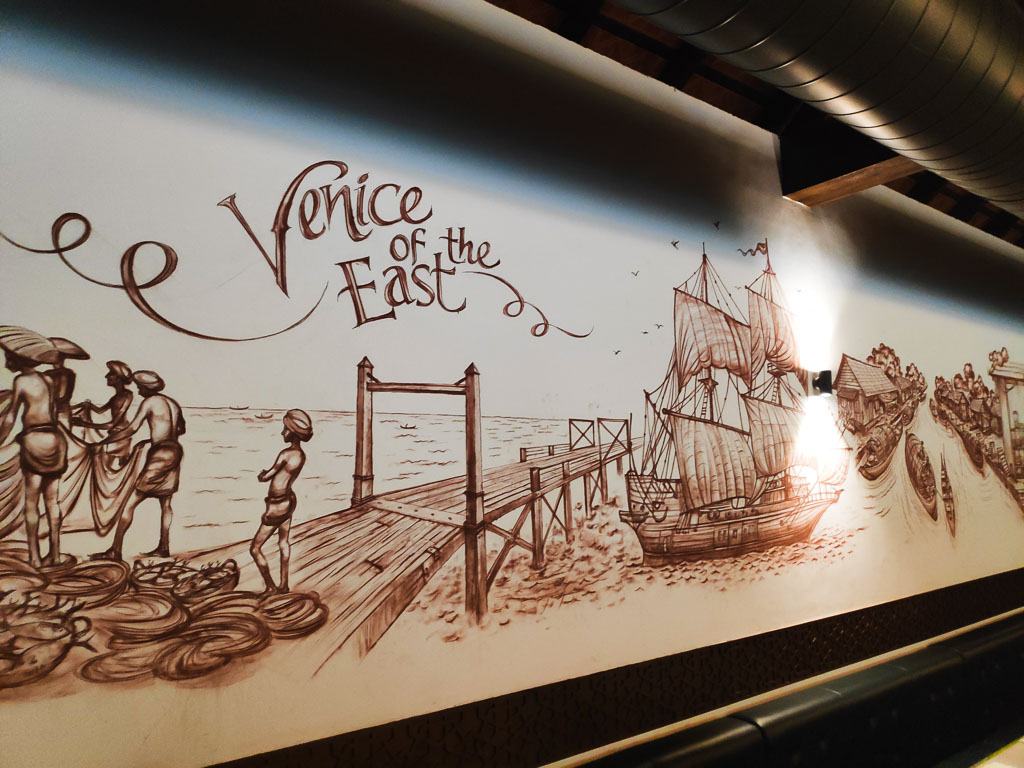
Munnar's hills, Alleppey's backwaters, and Varkala's cliffs are on almost every Kerala itinerary for good reason — they're genuinely worth visiting, and worth exactly the time everyone gives them. But they're also just one version of Kerala, and treating them as the whole trip means missing most of what the state actually holds.
Here's a different 12 days — one that sits entirely outside that classic route, and still only scratches the surface of what else is here.
Days 1–3: Kochi's Island Villages
Fort Kochi's harbor and colonial history are worth the time everyone gives them. But just outside the city, a cluster of island villages threaded together by narrow bridges holds onto a different pace entirely — Kadamakkudy, surrounded by Vembanad Lake, still runs on paddy fields, toddy tapping, and small-scale fishing, with almost none of the houseboat-tourist infrastructure found further south. A few neighbouring islands round out these three days, each with its own quieter version of backwater life.
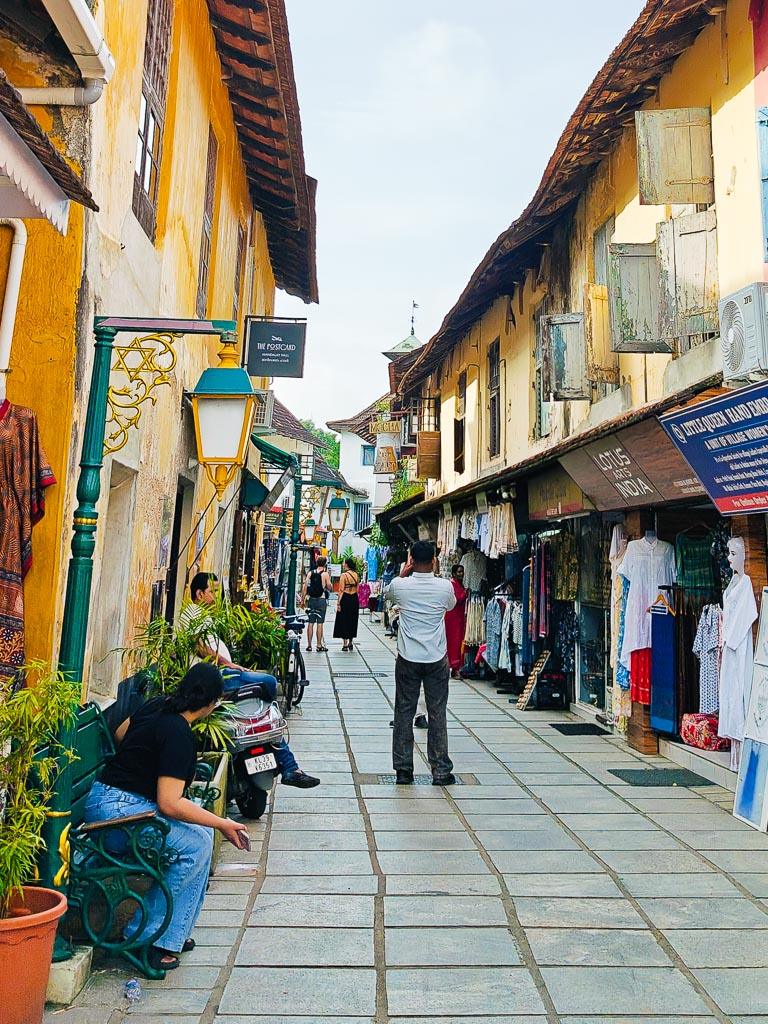
Fort Kochi's old town — worth a day, before heading for the quieter islands nearby.
Days 4–6: Palakkad's Heritage Interior
The first time I drove through Kalpathy, I stopped because I thought I'd taken a wrong turn. The street looked like it hadn't changed in a century. I hadn't taken a wrong turn. Kalpathy, recognized as Kerala's first heritage village, is a Tamil Brahmin agraharam founded by families who fled Thanjavur in the 1790s — its Sree Viswanatha Swamy Temple is said to echo Varanasi's Kashi Vishwanath. I walked through Kalpathy on a lightly rainy evening, and the timing was right — the streets were quiet, a few locals were out, and somewhere along the agraharam there was fresh pakoda being made roadside. The filter coffee here is the real thing.
Kalpathy hasn't learned to perform for visitors yet. That's the whole point of being here.
Nelliampathy sits above Palakkad in the hills and has a completely different character — tea plantations, coffee estates, wildlife, and during the monsoon, a forest that's genuinely alive. I went during the rainy season. The greenery was overwhelming in the best way. There were also leeches. I'd still go back without hesitation. This is hill country without the infrastructure or the crowds — the rawness is the feature, not the flaw.
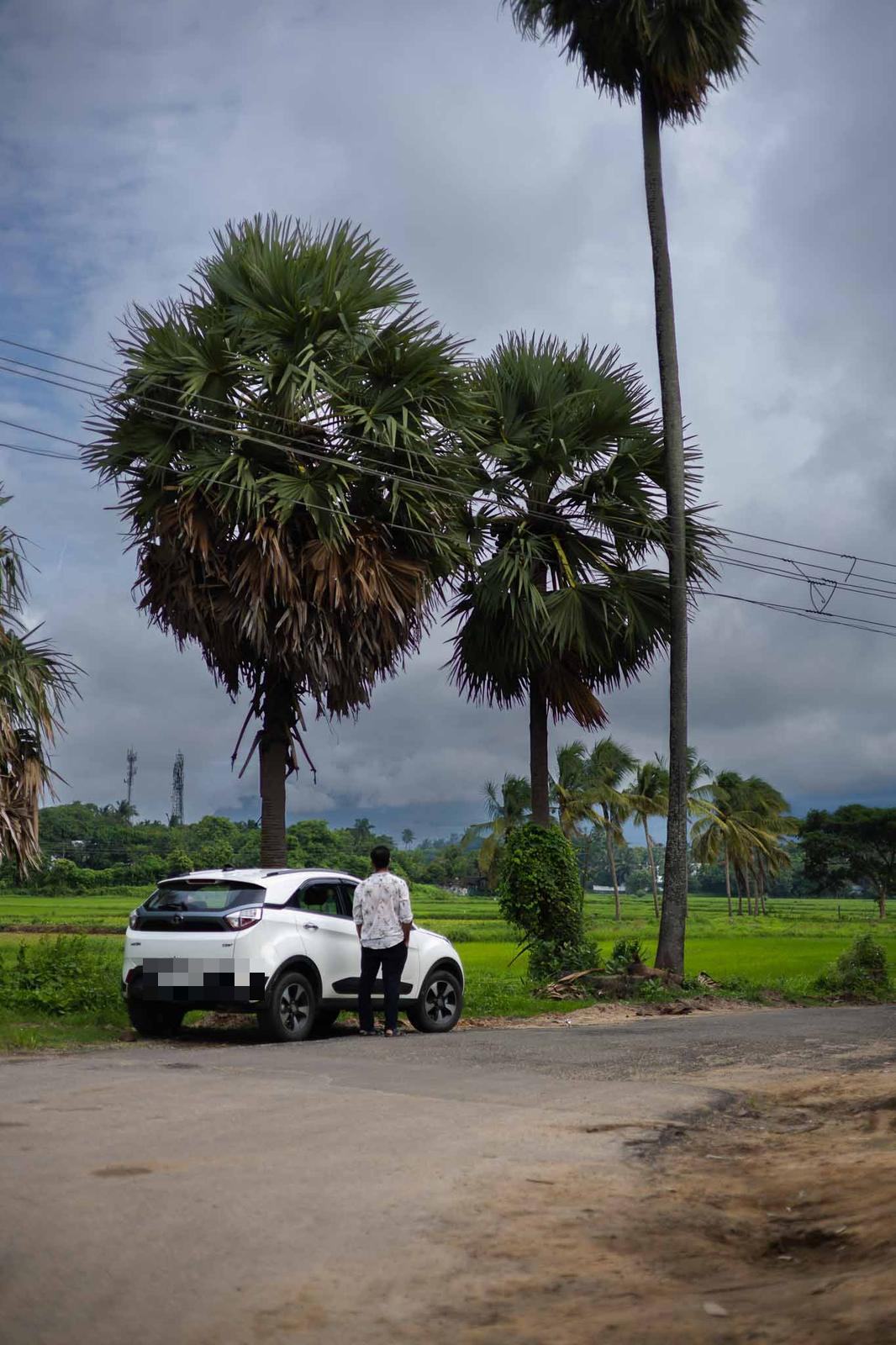
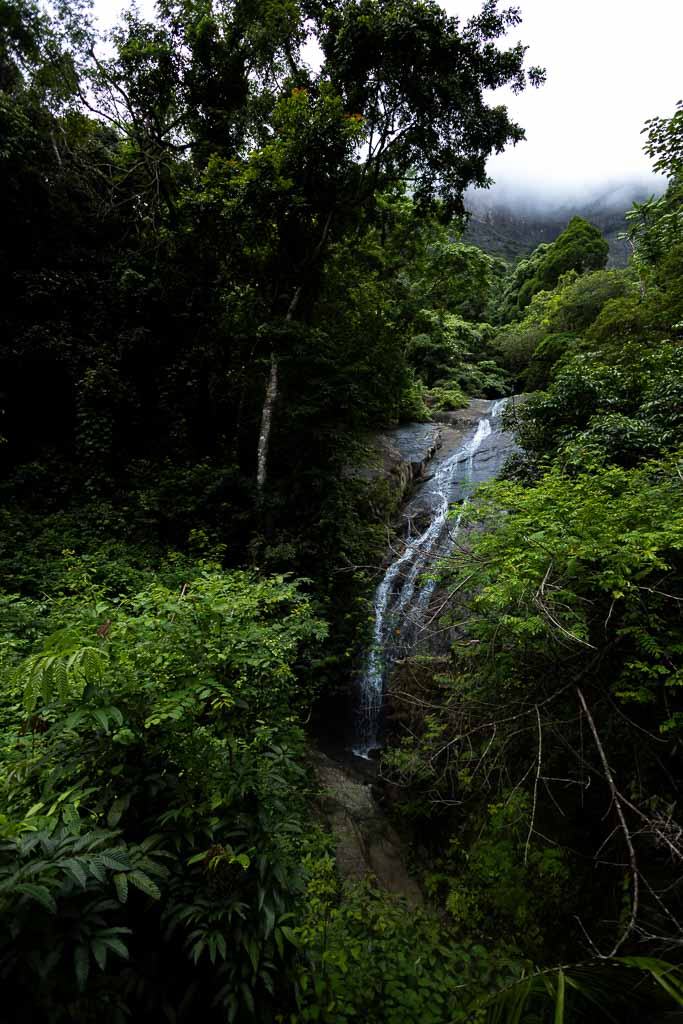
Palakkad's paddy country, and a waterfall along the forest road up to Nelliampathy.
Palakkad in peak summer (April–May) is extremely hot. I'd only put it in an itinerary between October and March. Hill country nearby offers tea and coffee plantations without Munnar's crowds, and a few days in Palakkad's paddy country — it's known as the "Granary of Kerala" — rounds out a side of Kerala most visitors never see. The stay I'd recommend in Palakkad puts you right next to the paddy fields — and if your timing is right, you'll wake up to migratory birds moving through. It's the kind of morning that doesn't ask anything of you.
Days 7–8: Kozhikode's Malabar Core
Beyond its beaches, Kozhikode holds centuries of Indian Ocean trading history. The Mishkal Mosque, built in the 14th century by an Arab trader and still standing after a 1510 rebuild, is one of the oldest wooden mosque structures in Kerala. Tali Temple is a few minutes from the main city and worth an evening visit for exactly what doesn't happen there — nothing much, deliberately. When I went, locals were sitting outside with tea and Kozhikode snacks, the kind of slow late-afternoon that has no agenda. There's a temple pond attached, and a quietness to the whole street that the busier parts of the city don't have. It's not a highlight in any guidebook sense. It's just a good place to sit for an hour.
But the fastest way to understand Kozhikode is through its food — and I spent these two days doing exactly that.
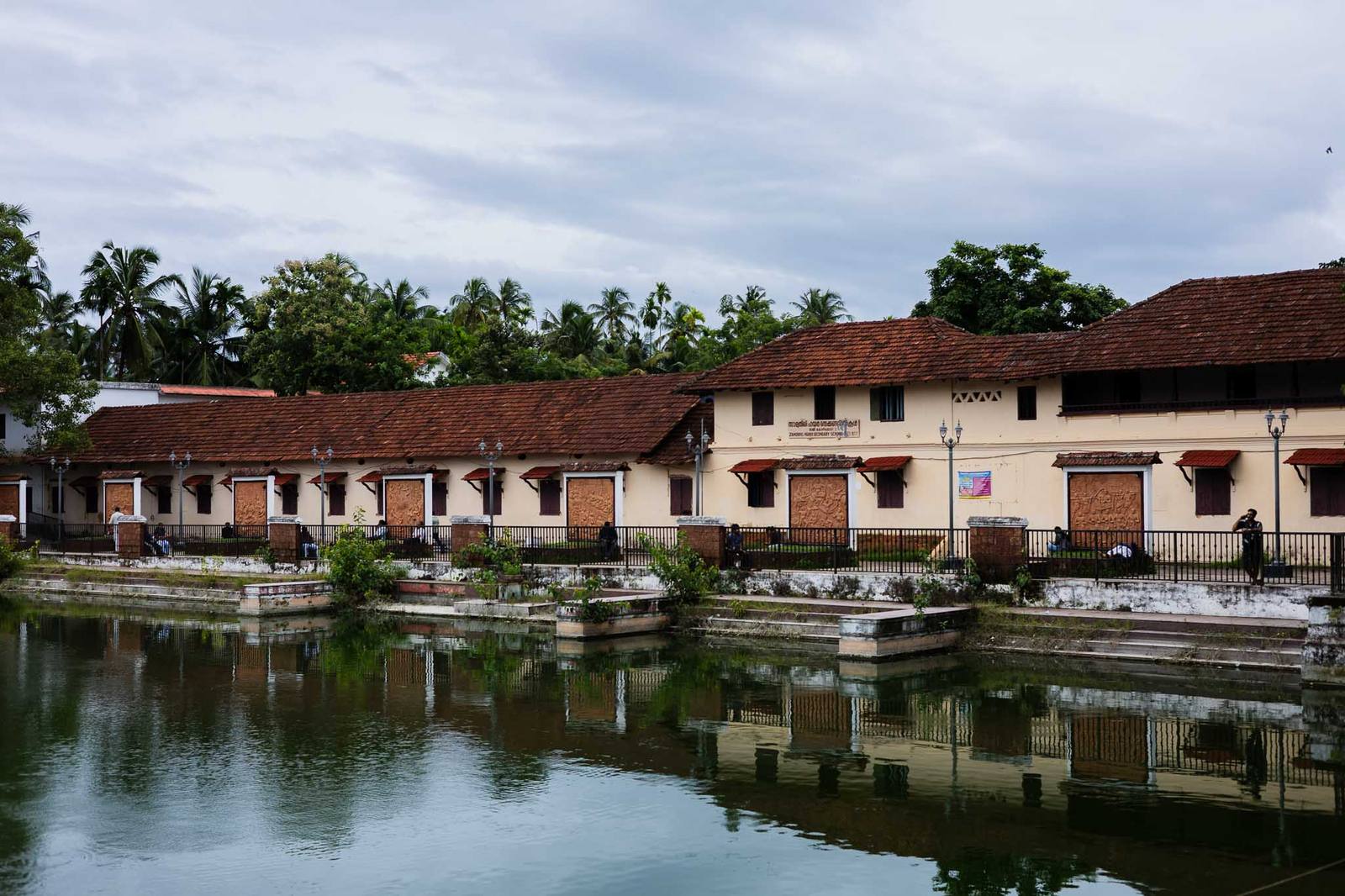
Tali Temple — not a highlight in any guidebook sense. Just a good place to sit for an hour.
Start with the Malabar biryani at Paragon, the kind of place that's been feeding travellers for generations; it's not the heavy, spiced biryani most foreigners expect from India — lighter, with subtle layered flavours and a texture that's entirely its own. Then there's kallumakkaya, the local mussels, usually steamed or fried with coconut and curry leaf — a dish you'll struggle to find done this well anywhere outside the Malabar coast. Pathiri, the soft rice flatbread, goes with everything here and tastes different from the north Indian breads most visitors know.
For fresh seafood and tapioca, I went to Chandrettande Chayakada — a no-frills local spot where the catch comes in and gets cooked the same day. Order the tapioca (kappa) with a fish or shrimp curry and you've got a meal that's pure Malabar coast, nothing performed for visitors. In the evening, walk Mittayi Theruvu — the street is famous for halwa, and Kozhikode halwa is a different product from the version you get elsewhere: dense, sweet, studded with cashew and ghee. Buy a few pieces and eat them walking. Then head down to the beach for the street food — fried snacks, fresh catches, things cooking on open grills past dusk.
And separately, for those who eat it: beef is a Malabar staple here in a way it isn't in most of India. The beef fry with parotta — slow-cooked, peppery, served with the flaky layered bread — is one of the defining dishes of Kozhikode, and worth seeking out if it's something you'd normally eat. I tried it; it's a different register of flavour from everything else on this list.
I did both ends of the spectrum: sit-down meals that explained the city's history, and beachside and roadside food that explained its daily life. As a traveller, this is the version of Kerala you remember longest — not a monument, but a meal you can't recreate at home.
Days 9–11: Kannur's Living Traditions
This is where the trip goes furthest off the standard map. Kannur is often called the cradle of Theyyam, a ritual performance art where performers embody deities through elaborate costume and trance-like dance at local shrines — genuinely rare to witness without knowing where and when it's happening.
Theyyam is the one thing in this itinerary I'd call genuinely irreplaceable — you can find backwaters and forts elsewhere in India, but there's nowhere else in the world where this happens.
Theyyam performances follow a ritual calendar that doesn't align with tourist demand — if your dates don't match, you won't see one. This is one of the first things I check when planning a Kannur itinerary.
The 16th-century St. Angelo Fort, built by the Portuguese in 1505, overlooks a quiet stretch of coastline, and a nearby village keeps a centuries-old hand-craft tradition alive that few visitors ever encounter.
Day 12: Return
Fly out from Kannur, or transfer back to Kochi, depending on your onward plans.
The Point of This Route
This itinerary never goes near Munnar, Alleppey, Kumarakom, Wayanad, Thekkady, Varkala, Kovalam, or Trivandrum — the destinations that appear on almost every "Kerala highlights" list. And in twelve days covering only a slice of central and northern Kerala, it still moves through island backwater ecology, a 230-year-old heritage village, tea-country hills, a living food culture, a living ritual art form, and a 500-year-old fort.
That's the real case for Kerala as a dedicated destination: this route is genuinely one version of Kerala, not the whole of it — the backwaters and hill country further south, or Wayanad's forests, are an entirely different trip again. A single state holding this much distinct history, geography, and living culture isn't something you fit into a three-day stop on a bigger India tour. It's a destination that rewards being the whole trip.